medhya
Perimenopause, naturally
The conversation we never had
For generations, women were told that hormonal changes were something that happened quietly around age 50: your period stopped, you had a few hot flashes, and that was that.
Nobody warned us about what happens in our late 30s and 40s. Nobody mentioned waking up at 3 AM with a racing heart and drenched sheets, suddenly feeling a surge of unexplainable rage over a minor inconvenience, struggling to find everyday words in a work meeting, or watching your waistline expand even though you haven’t changed how you eat or exercise.
When we finally gather the courage to talk to a doctor, we are far too often met with dismissive nods: “Your blood work is completely normal,” “It’s just midlife stress,” or “You’re just getting older, get used to it.”
medhya
Perimenopause, naturally
1. What is perimenopause & how does it work?
Perimenopause isn’t a single event — it’s the journey leading up to menopause. While menopause is just one day on the calendar (the day you reach 12 full months without a period), perimenopause is the multi-year transition where your ovaries slowly shift their function.
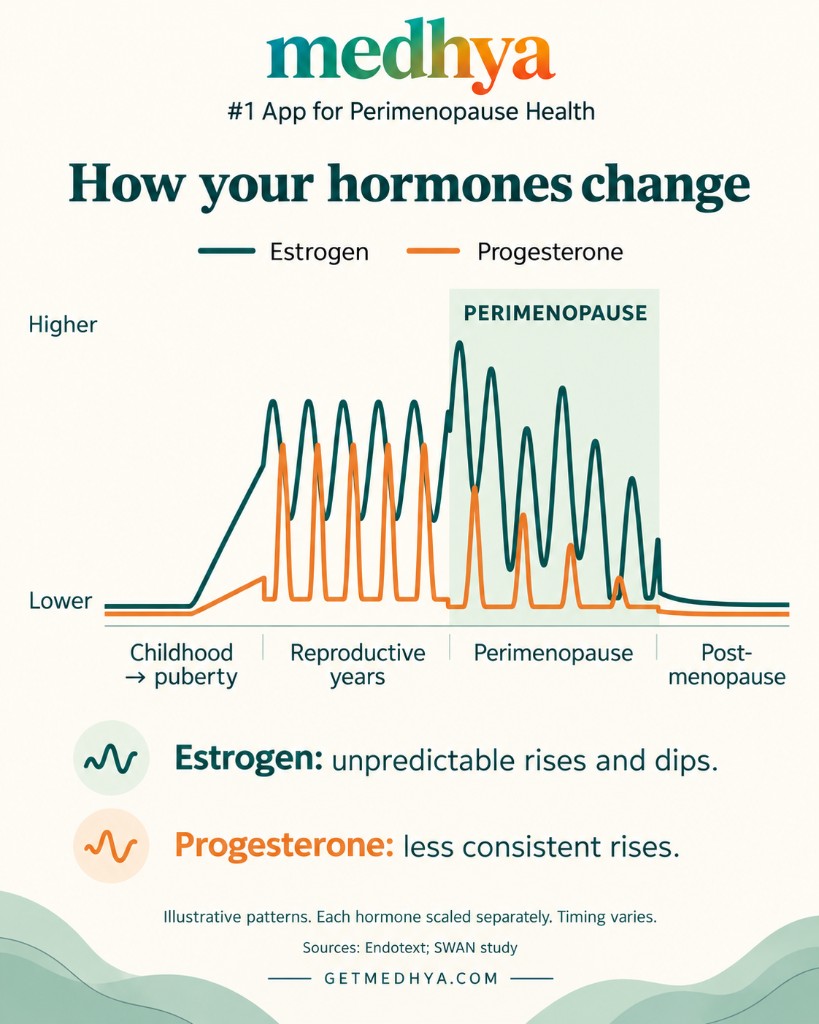
For most women, this journey begins in their late 30s or early 40s. The chart below is illustrative. Each hormone is scaled separately. Timing varies.
medhya
Perimenopause, naturally
The two phases you will experience
Early perimenopause (late 30s to early 40s)
Your period might still show up on time, but progesterone drops first. This happens because you stop ovulating every single month. Meanwhile, estrogen doesn’t just quietly drop — it swings wildly and can actually spike up to 30% higher than it did in your 20s. This creates an imbalance where estrogen rules the room without enough progesterone to calm things down.
Late perimenopause (mid to late 40s)
You start skipping periods or having cycles that arrive way too close together. Estrogen plunges, spikes, and crashes unpredictably until your period eventually stops altogether.
medhya
Perimenopause, naturally
2. Perimenopause affects your whole body, not just your ovaries
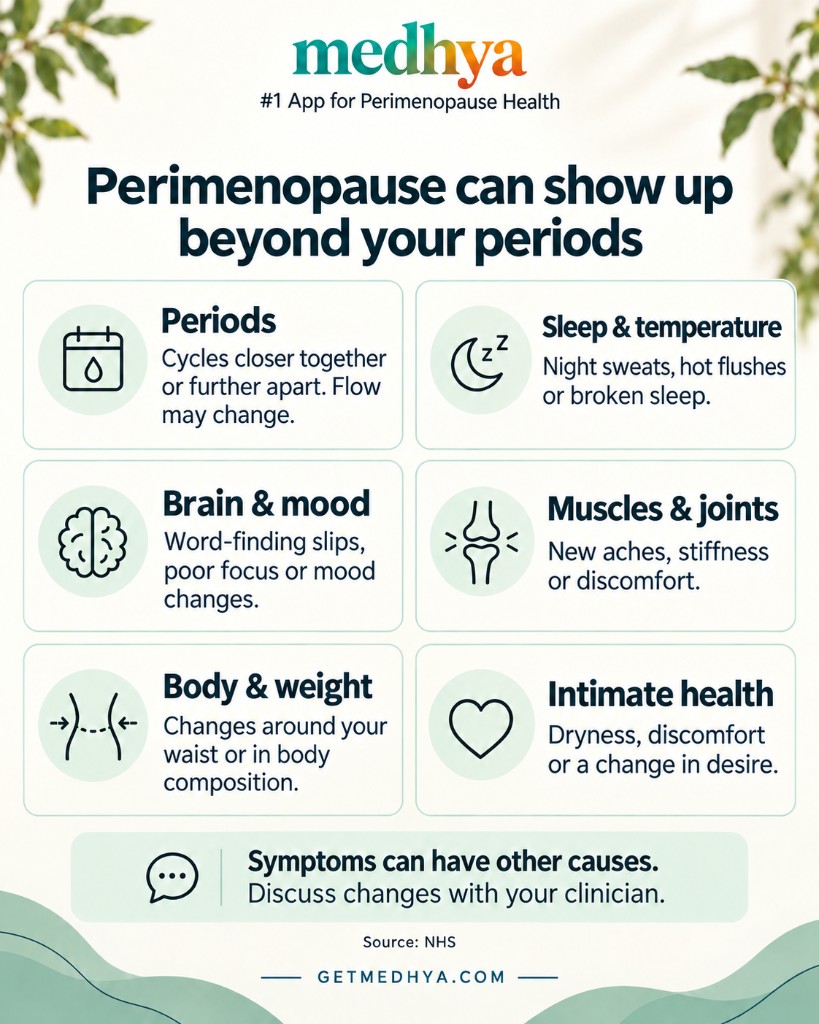
It is easy to think of perimenopause as a “reproductive” issue, but estrogen and progesterone receptors are located in virtually every single tissue in your body — from your brain and heart to your joints and gut. When your hormone levels go on a rollercoaster, your whole body feels the ride.
medhya
Perimenopause, naturally
Your brain & mood
Estrogen acts like fuel for brain cells, helping them use glucose for energy. Progesterone breaks down into a natural calming neuro-steroid that soothes your nervous system. When both hormones swing, you end up with brain fog, memory slips, sudden anxiety, 3 AM waking, and mood swings that feel completely out of your control.
Your digestion & gut
Declining progesterone slows down the movement of your digestive tract, causing food to linger longer. This leads to heavy bloating, gas, and sluggish bowels. At the same time, changing estrogen alters your gut microbiome (your estrobolome), making you suddenly sensitive to foods you’ve eaten your whole life.
Your bones & muscles
Estrogen acts as a protective shield for your collagen, joint cartilage, and bone tissue. As it drops, you might notice waking up with stiff hands, aching knees, lower back pain, and a loss of muscle strength even if you work out.
medhya
Perimenopause, naturally
Your metabolism & weight
Estrogen helps your cells stay sensitive to insulin. When estrogen drops, your cells become more resistant to insulin, meaning your body starts storing sugar as fat — especially around your belly and waist — rather than using it for quick energy.
Your heart & body temperature
Estrogen keeps your blood vessels flexible and helps your brain’s internal thermostat stay balanced. When estrogen dips sharply, your thermostat misfires, causing hot flashes, night sweats, and sudden heart palpitations.
Symptoms can have other causes. If something is new, severe, or getting worse, take it to your clinician — and take this booklet with you so the conversation has a map.
medhya
Perimenopause, naturally
3. The full lab picture: what gets checked (and what gets missed)
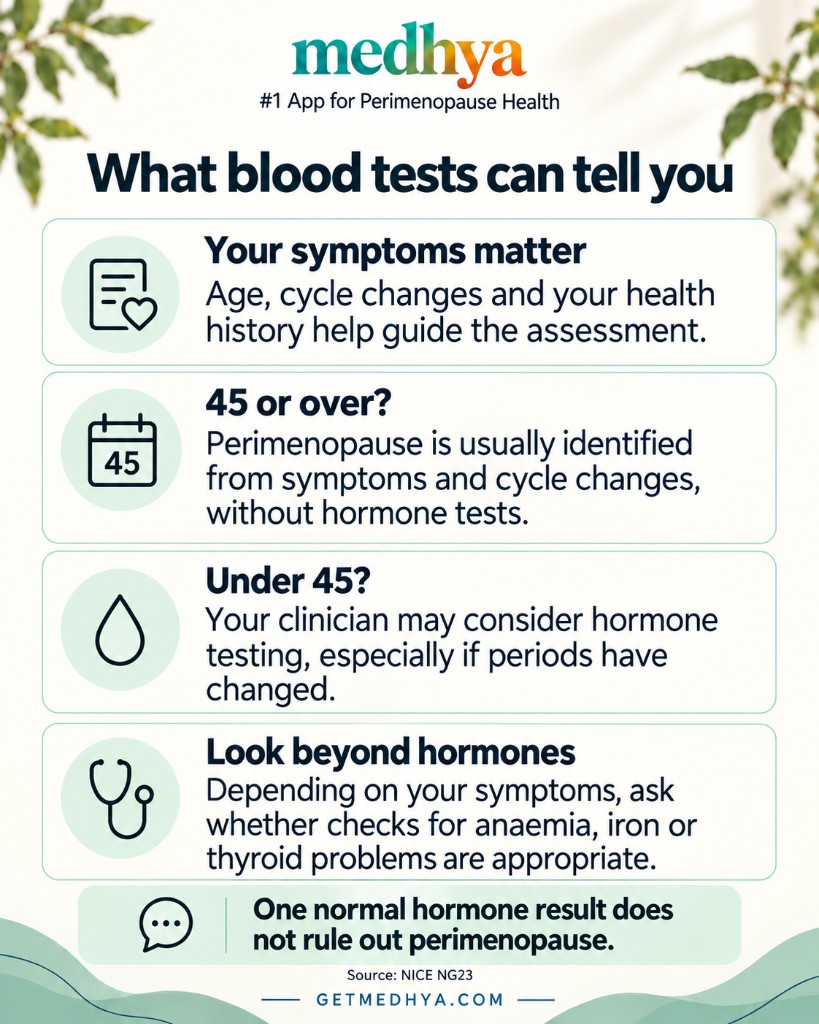
When a woman in her late 30s or 40s goes to the doctor with fatigue, weight gain, anxiety, or heavy periods, doctors often order basic blood work. Perimenopause is rarely a single-lab diagnosis, and many other underlying conditions can mimic or worsen perimenopause symptoms.
Here is the complete list of labs that are usually checked — or should be checked — to give you a complete picture of your health.
medhya
Perimenopause, naturally
A. Sex hormones (and why they are often “normal”)
- FSH & LH: FSH goes up when your brain has to work harder to prompt your ovaries to release an egg.
- Estradiol: measures your primary active estrogen.
- Progesterone: your calming hormone (best tested about 7 days after ovulation).
- Total & free testosterone: energy, libido, muscle tone, and mental drive.
medhya
Perimenopause, naturally
B. The non-hormonal labs you must check
Because perimenopause affects your entire system, symptoms like fatigue, hair loss, weight gain, and brain fog are frequently driven or worsened by non-sex hormone imbalances. A thorough evaluation should include:
1. The thyroid panel (the twin sister to perimenopause)
Thyroid issues become extremely common in your late 30s and 40s, and thyroid symptoms mirror perimenopause almost exactly. Ask for TSH, Free T3, Free T4, and TPO antibodies (to check for autoimmune Hashimoto’s).
2. Iron & storage reserves (for heavy flow & fatigue)
If you are dealing with heavy perimenopausal periods, your iron reserves can get drained quickly, causing severe exhaustion, cold hands, and hair thinning. Ask for serum ferritin (stored iron, not just circulating iron) and a complete blood count. Doctors often consider a ferritin of 15 “normal,” but optimal energy usually requires levels above 50–70.
medhya
Perimenopause, naturally
3. Metabolic & blood sugar markers (for midsection weight & cravings)
Fasting insulin catches insulin resistance years before fasting glucose goes up. Fasting glucose & HbA1c show your average blood sugar over about 3 months. Lipid panel: estrogen protects heart health and keeps cholesterol balanced; as estrogen drops, LDL and triglycerides often shift upward.
4. Micronutrient & inflammatory markers
Vitamin D3 for mood, immune health, bone density, and hormone synthesis. Vitamin B12 & folate for brain energy, nerve function, and clearing brain fog. hs-CRP measures low-grade systemic inflammation.
Print this list. Bring it to your appointment. You are not being “difficult” — you are asking for a complete picture.
Curious where your body needs the most support right now?
Take the 4-minute quiz →medhya
Perimenopause, naturally
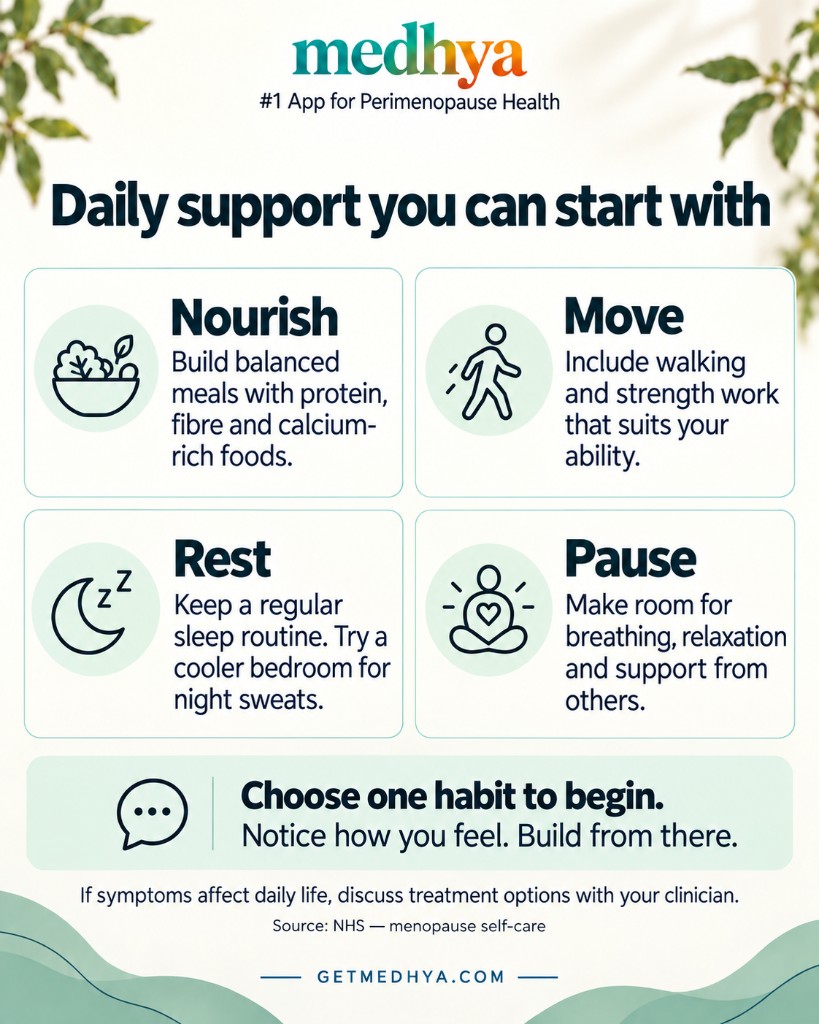
4. Natural tools & daily pillars to support your health
You don’t have to wait for your labs to show an extreme result before you start taking care of yourself. Supporting your body in your late 30s and 40s is about creating daily safety, nourishing your tissues, and calming your stress response.
medhya
Perimenopause, naturally
Pillar 1: Nourishing your nervous system & adrenals
When your ovaries start slowing down hormone production, your adrenal glands act as the backup generator. If your adrenals are already exhausted from stress, they prioritize making stress hormones (cortisol) over supporting your sex hormones.
Never drink coffee on an empty stomach
Always eat some protein or healthy fat before your morning coffee to avoid a massive adrenaline surge.
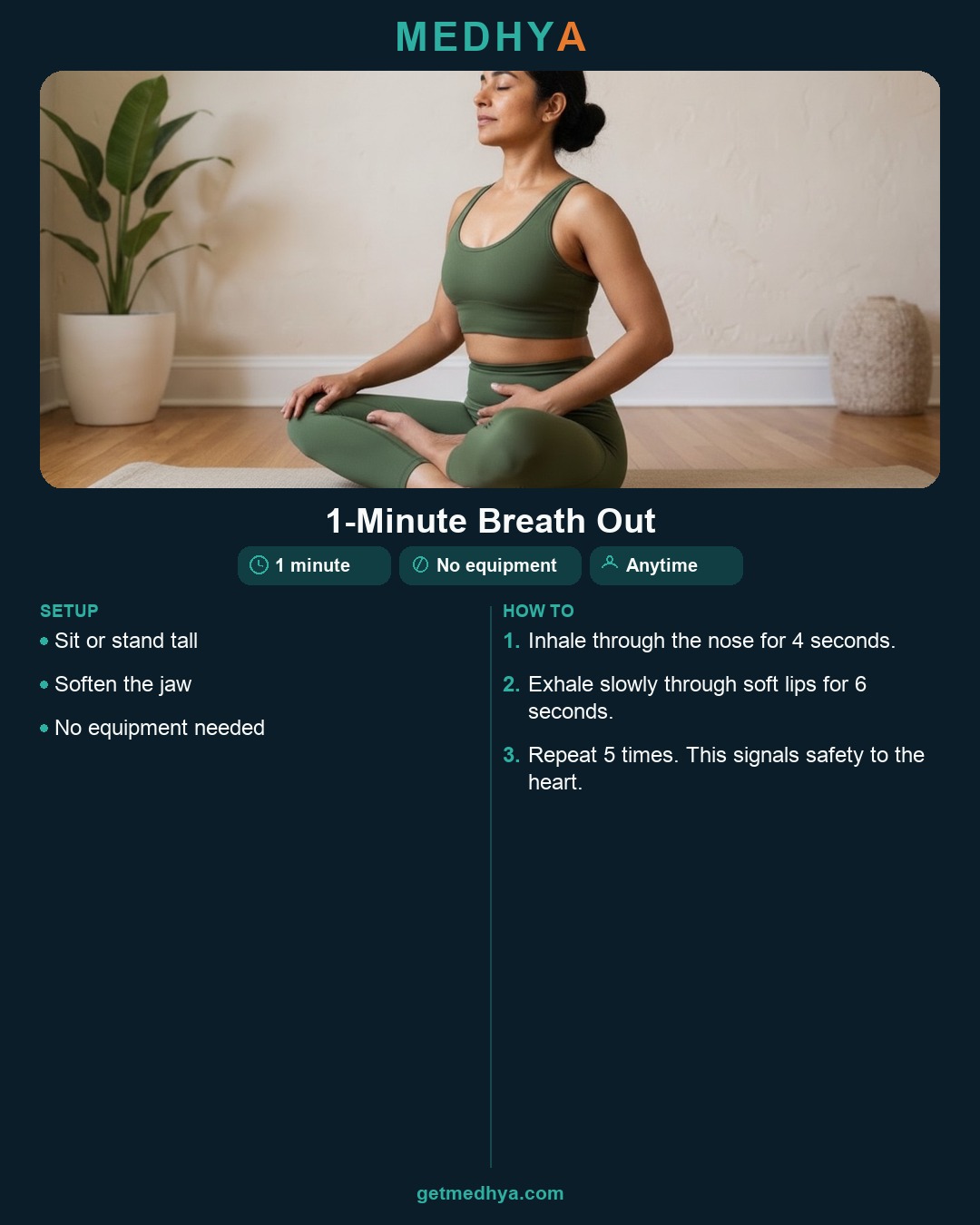
Daily 5-minute somatic reset
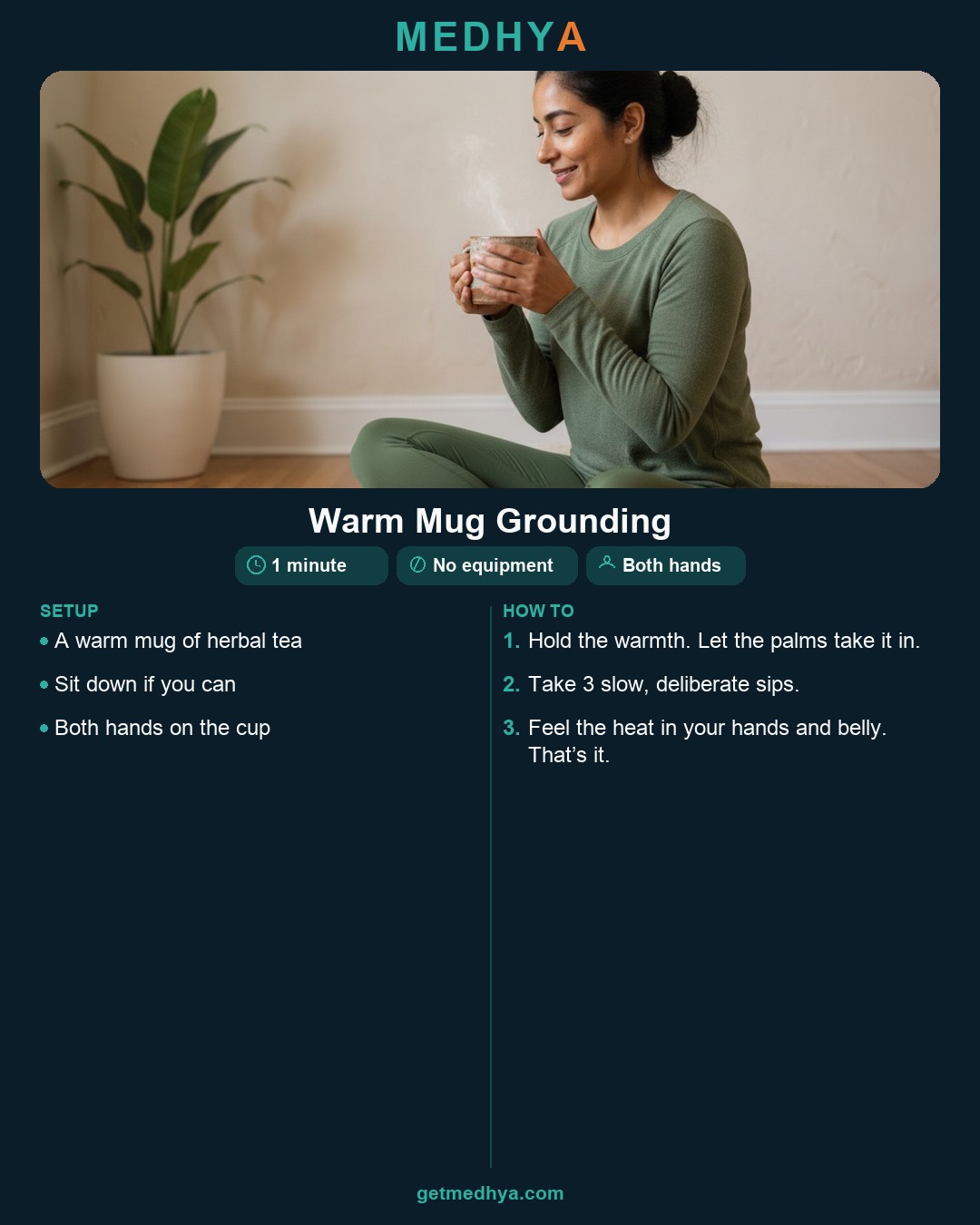
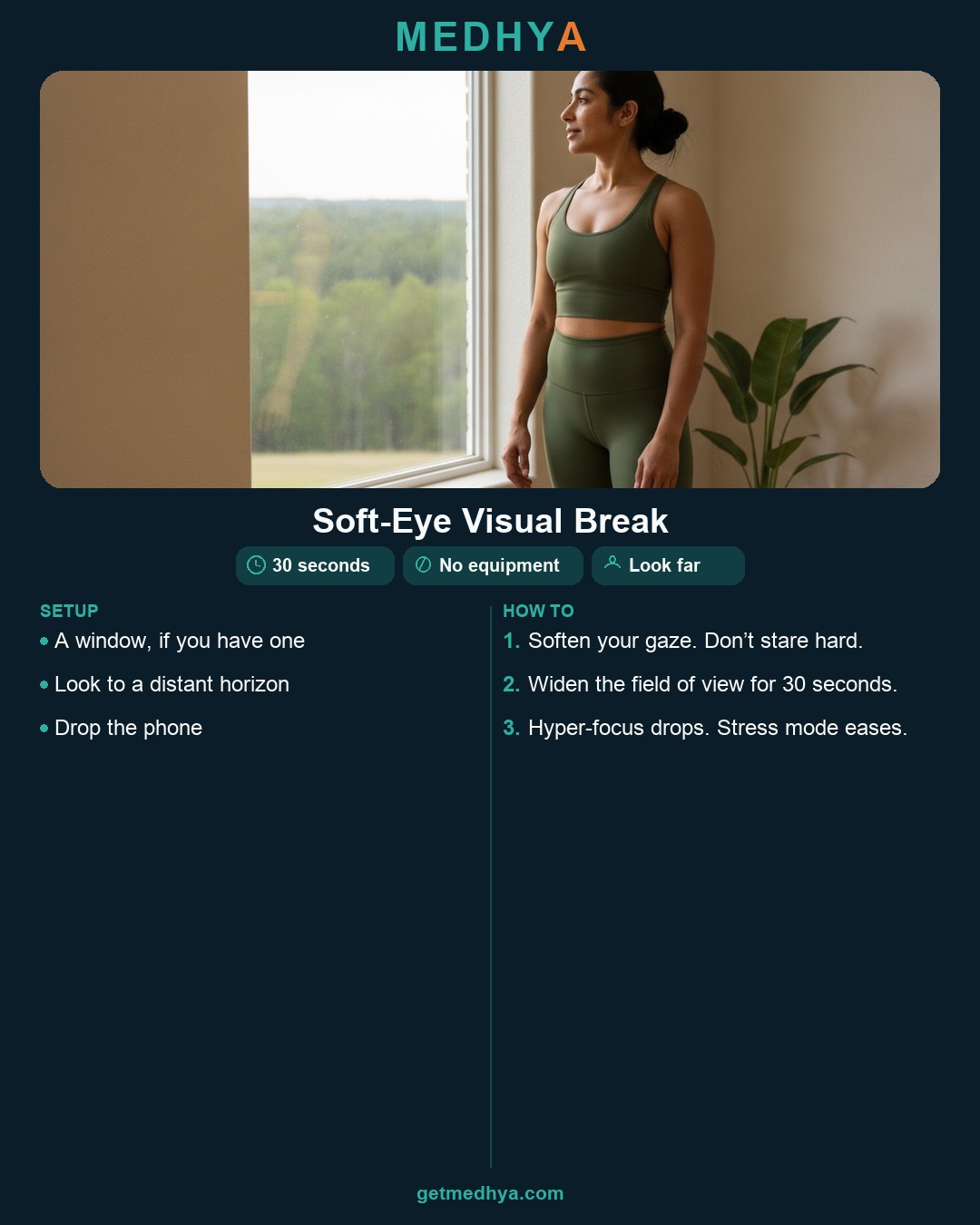
Take 5 minutes every afternoon for deep belly breathing or lying with your legs up against a wall to signal to your brain that you are safe. The three practices below are the same style you will find inside Medhya — short, no equipment, done in real life.
medhya
Perimenopause, naturally
Breathwork
medhya
Perimenopause, naturally
Warm mug
medhya
Perimenopause, naturally
Horizon
medhya
Perimenopause, naturally
Pillar 2: Fueling your metabolism & blood sugar
Keeping your blood sugar steady prevents the sudden spikes in insulin that lock fat around your belly and drive intense afternoon sugar cravings.
Anchor every meal with protein & fiber
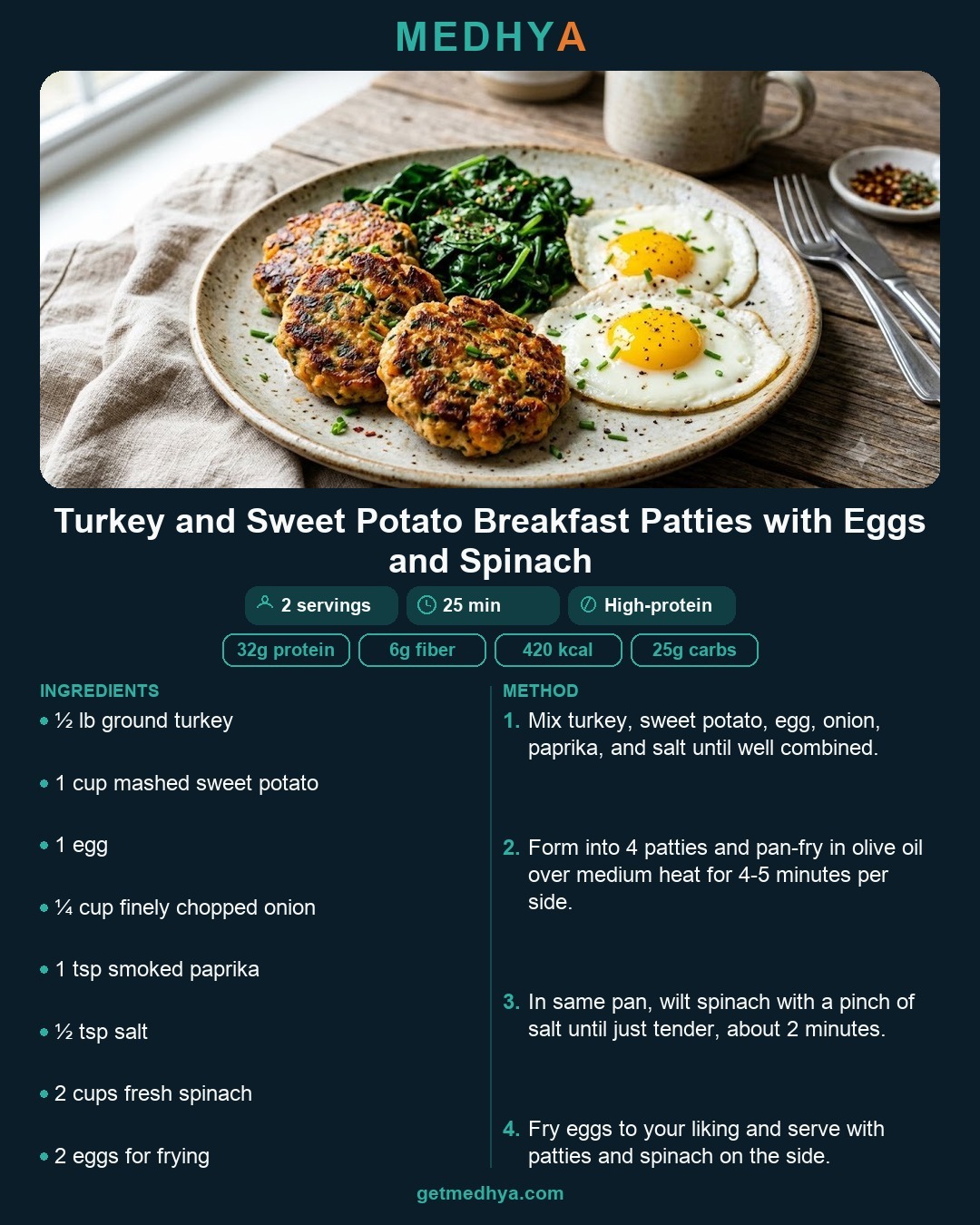
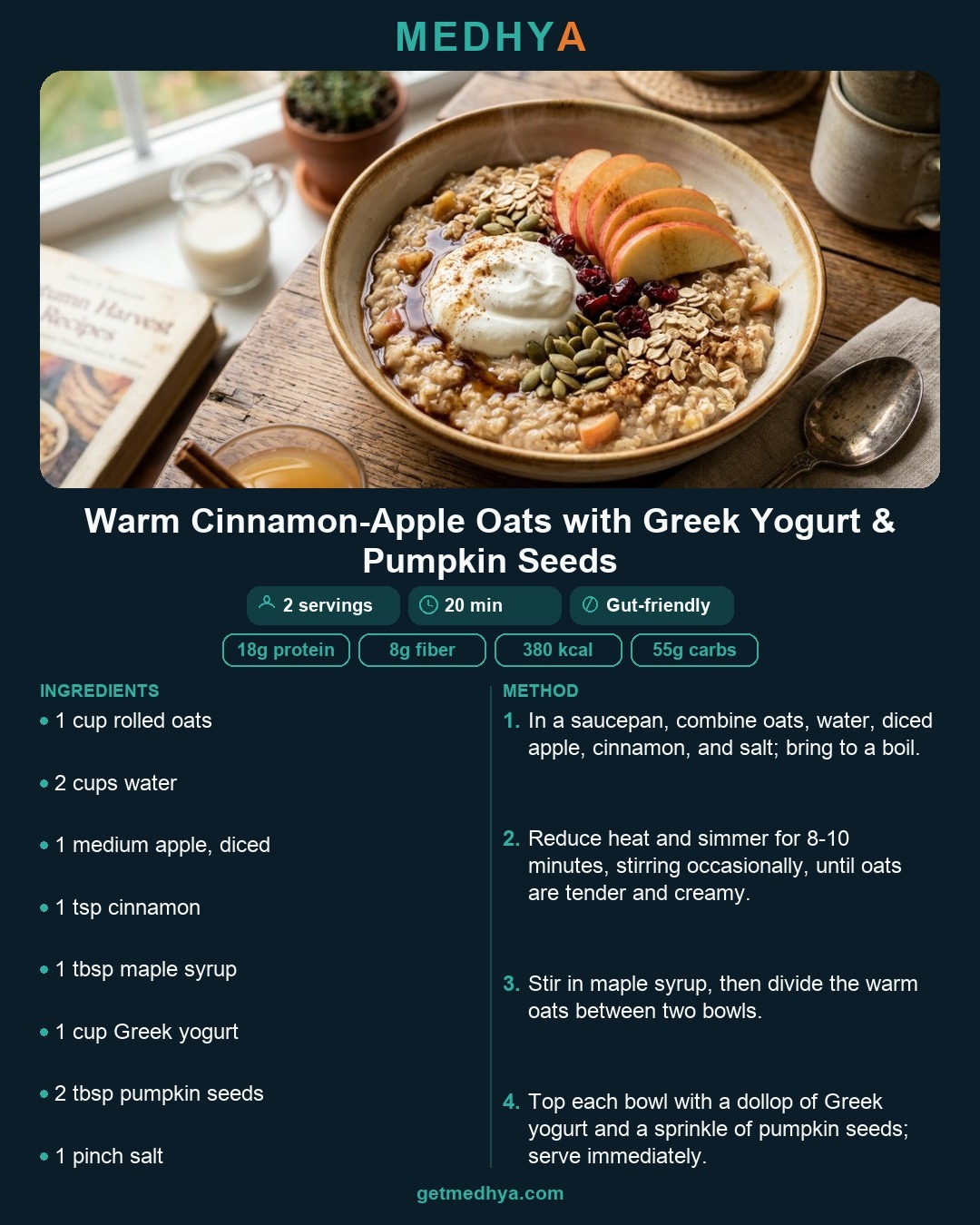
Pair clean protein (eggs, poultry, fish, lentils) with soluble fiber (chia seeds, flaxseeds, oats) at every meal.
Low-cortisol strength & joint-safe movement
Swap out exhausting, high-intensity cardio that leaves you drained for joint-safe resistance training, walking, and yoga.
medhya
Perimenopause, naturally
Breakfast

medhya
Perimenopause, naturally
Breakfast
medhya
Perimenopause, naturally
Breakfast
medhya
Perimenopause, naturally
Pillar 3: Supporting your cleansing highways (liver & gut)
Once your body finishes using estrogen, your liver breaks it down and your gut sweeps it out. If your digestion is sluggish, old estrogen gets reabsorbed into your bloodstream, making heavy periods and mood swings twice as bad.
Include prebiotics and probiotics for gut support
Feed the gut with prebiotic foods (cooked oats, whole grains, bananas, onions, garlic, and root vegetables like sweet potato) and add probiotic foods (plain yogurt, kefir, buttermilk, or a small serving of fermented vegetables) so digestion stays regular and old hormones can leave the body instead of circulating again.
Eat liver-friendly veggies
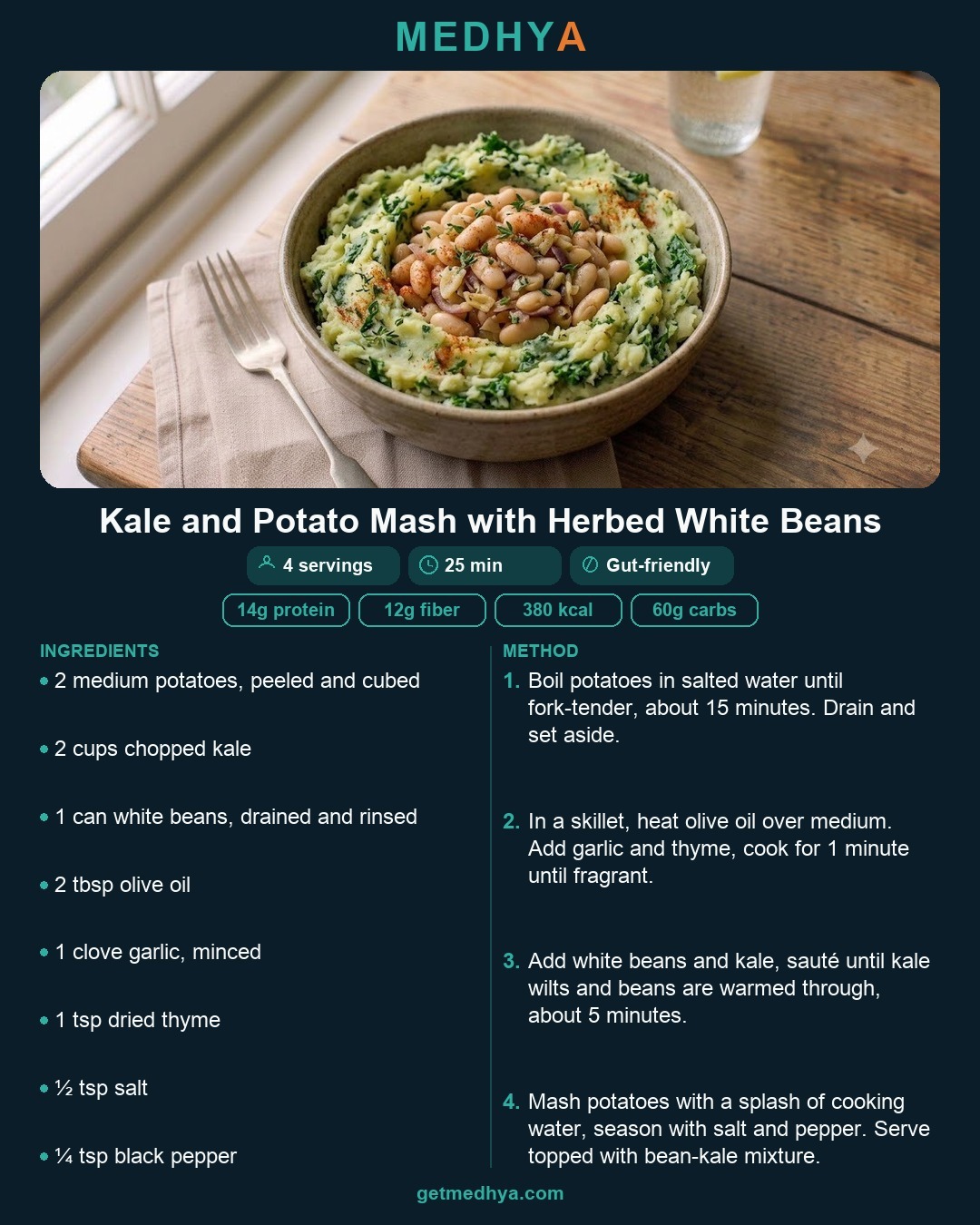
Include cruciferous vegetables (broccoli, Brussels sprouts, kale) and bitter greens to help your liver clear processed hormones.
Focus on daily elimination
Drink warm water throughout the day and eat warm, cooked meals to keep your gut moving every morning.
medhya
Perimenopause, naturally
Lunch
medhya
Perimenopause, naturally
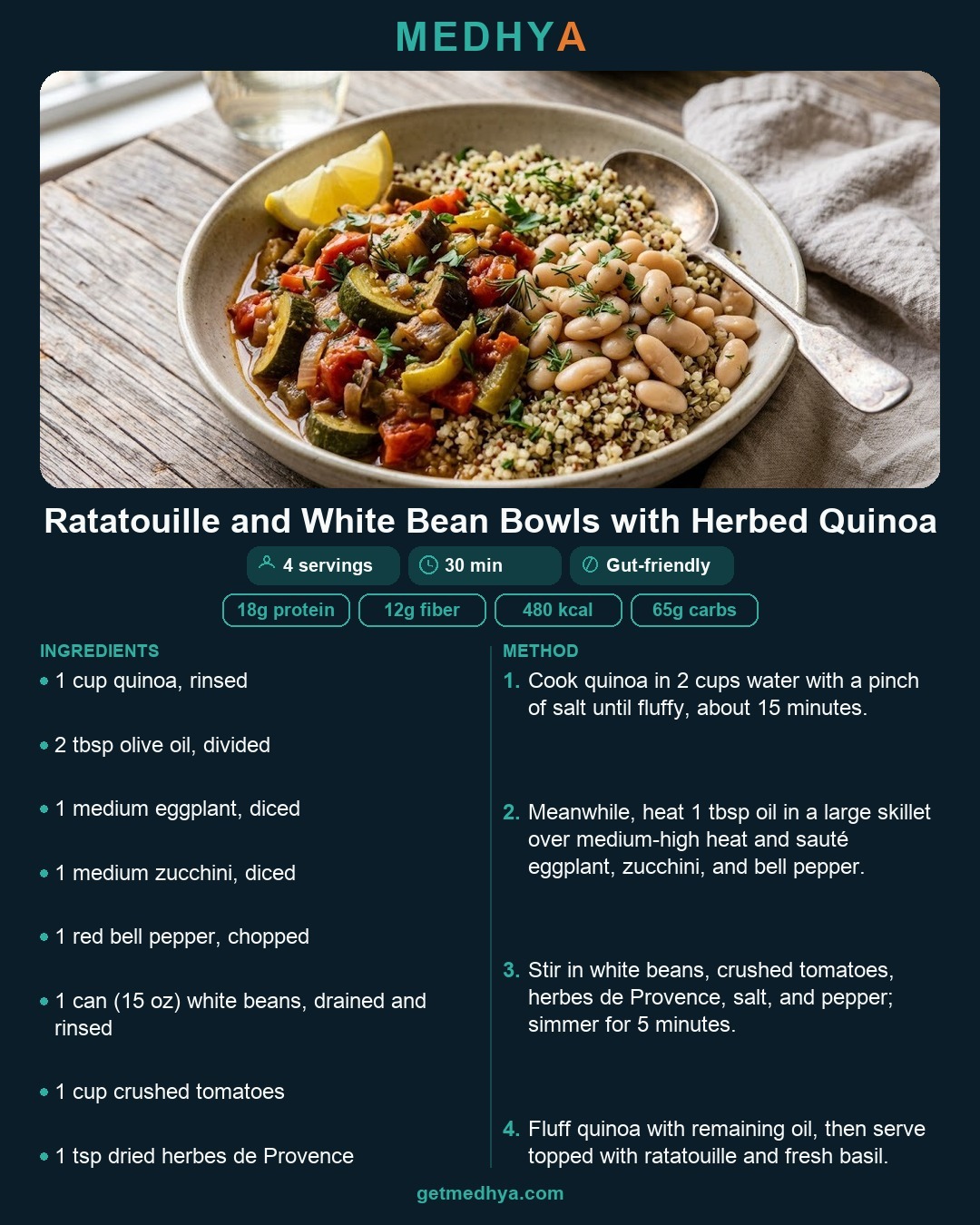
Lunch

medhya
Perimenopause, naturally
Lunch
medhya
Perimenopause, naturally
Pillar 4: Restoring tissue hydration & sleep
Restorative sleep and deep hydration protect your brain clarity, skin, and joint comfort.
Bedtime glucose safety net
Eat a small, healthy snack with fat and protein 30 minutes before bed — a spoonful of almond butter or pumpkin seed butter, some soaked nuts, psyllium husk, or soaked chia seeds — to stop 3 AM blood sugar crashes that can wake you up.
Embrace healthy fats
Incorporate extra virgin olive oil, avocados, ghee, pumpkin seeds, flaxseeds, and soaked nuts to nourish your mucous membranes and relieve dryness from the inside out. Massage the skin of your lower body and arms with sesame oil in winter or coconut oil in summer to nourish and hydrate from the outside too.
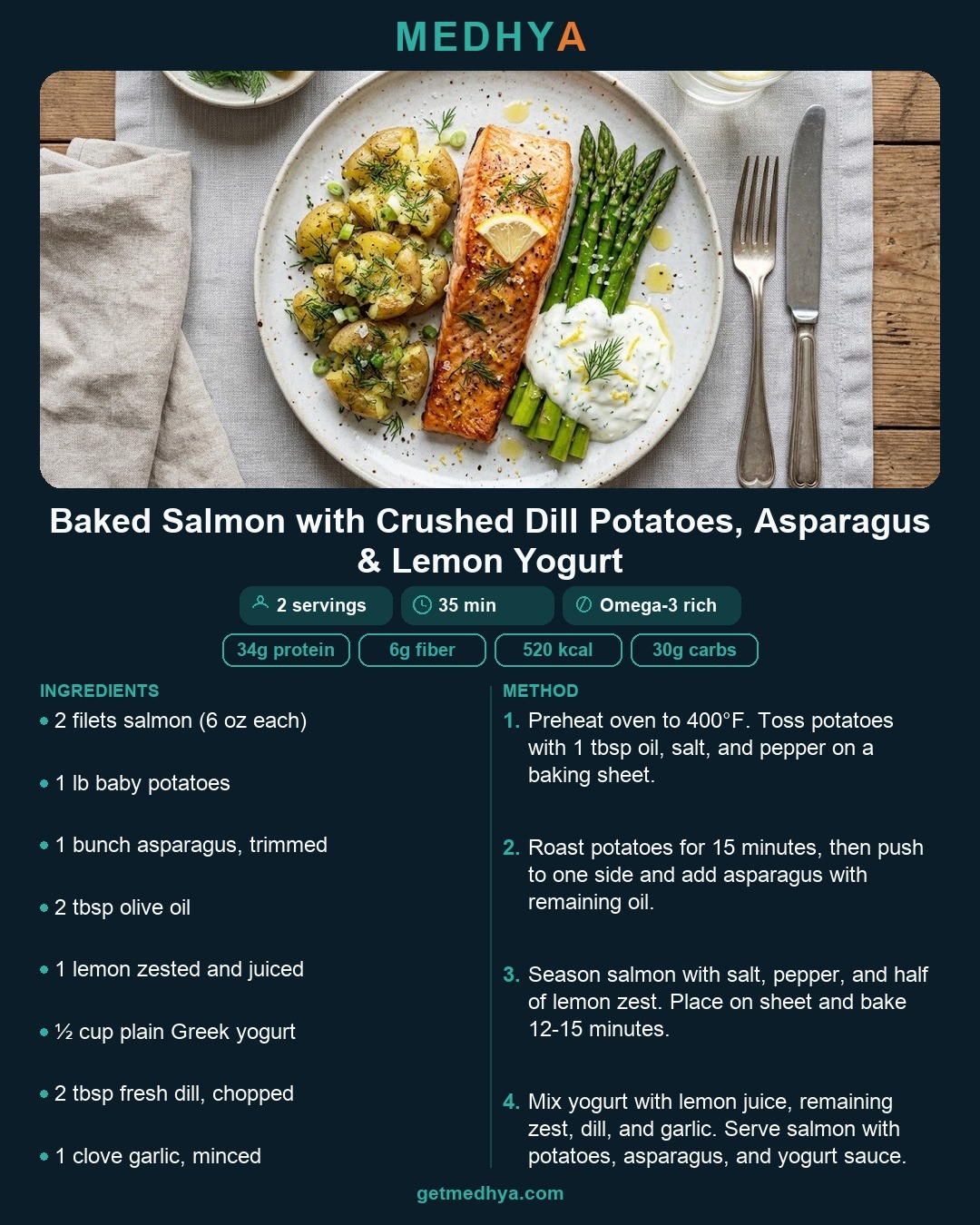
Dinner should be a balanced, easy-to-digest meal with protein, fiber, and cooked vegetables, which helps prevent late-night blood sugar swings. Here are two Medhya plates you can actually try:
medhya
Perimenopause, naturally
Dinner
medhya
Perimenopause, naturally
Dinner